FRONTIER25 FRONTIER25
Contact us

CBAM Policy Hack: UAE's Path Forward

29.10.2024
Report

This report gathers key takeaways from CBAM Policy Hack: UAE’s Path Forward, an event which brought together relevant stakeholders from across the public, private, and third sectors to identify challenges and opportunities related to the implementation of the Carbon Border Adjustment Mechanism (CBAM) and provide recommendations regarding strategies for adapting to CBAM. The CBAM is designed to prevent “carbon leakage,” where manufacturing relocates from countries with stringent emission regulations to those with lax standards. It imposes a tax on the carbon content of imports from certain sectors.


A CBAM is in the process of being implemented in the European Union (EU) and is scheduled to be imposed in the United Kingdom (UK) by 2027. With support from the British Embassy in the UAE, CBAM Policy Hack: The UAE’s Path Forward was hosted by UICCA and the UAE’s Ministry of Economy. The presence of industry players at the event encouraged knowledge sharing on how to reduce emissions across industries affected by CBAM. The event was organised based on thorough research and designed to gather diverse perspectives on how CBAM affects the UAE.  
Download Report

Download

Related Research

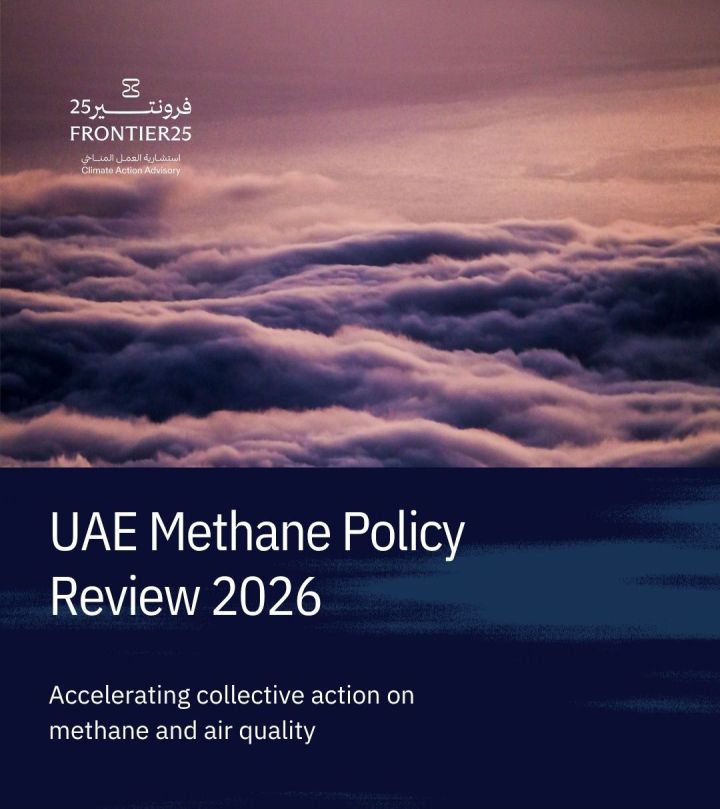
In November 2025, Frontier25 hosted a policy hack on accelerating collective action for methane and air quality, in partnership with the Global Methane Hub. The policy hack aimed to address the urgent challenge of rising methane emissions by strengthening collaboration to fill critical knowledge gaps, identifying high-impact interventions, and supporting policy innovation in the United Arab Emirates (UAE) and the broader Middle East and North Africa (MENA) region. The event consisted of three components: a presentation, a panel discussion, and breakout group sessions.

Discover more

This report explores the role of Sovereign Wealth Funds (SWFs) in advancing climate resilience across the Middle East and North Africa (MENA). Developed through data analysis and a closed-door roundtable, it highlights how regional SWFs are shifting portfolios towards clean energy, with investments reaching nearly $2.5 billion in 2022. Led by ADIA, Mubadala, PIF, and QIA, these funds are diversifying into renewables, hydrogen, and storage while signalling a broader move toward emerging climate technologies. Stakeholders emphasised both opportunities and challenges, from gaps in adaptation finance for sectors like water and biodiversity to the need for innovative blended finance models that can de-risk investments and crowd in private capital. The report sets out a forward-looking agenda for SWFs to expand beyond mitigation into resilience and adaptation, aligning fiduciary responsibility with long-term regional climate security and positioning the MENA region as a leader in climate finance.

Discover more

This report outlines the findings of a closed-door roundtable convened during Make it in the Emirates (MIITE) Week, bringing together senior representatives from government, industry, academia, and finance to examine how Abu Dhabi can catalyse a national piloting programme for climate-deep tech. Developed in collaboration with Abu Dhabi Sustainability Week, the Global Climate Finance Centre, UICCA, Hub71, and PwC Middle East, the report identifies the infrastructure, capital, and regulatory gaps that currently limit the scale-up of hardware-intensive climate technologies critical to the UAE’s future economy, including energy storage, green construction materials, and low-carbon industrial processes. Stakeholders reached consensus on the urgency of creating real-world testing environments, aligning regulatory pathways, and de-risking capital-intensive innovation. The report sets out a three-pillar action framework—enabling piloting infrastructure, mobilising tailored financing, and strengthening governance—to guide collective action and investment. It provides a strategic foundation for stakeholders to collaborate on bridging the deployment gap, ensuring that the UAE remains at the forefront of global climate innovation while advancing its Net Zero by 2050 commitments.

Discover more

The UAE has set ambitious targets to achieve net-zero emissions by 2050. The electrification of commercial fleets, particularly in the last-mile delivery sector, represents a significant opportunity to contribute to this goal. As the e-commerce sector in the UAE continues to grow, there is increasing urgency to transition to EVs for last-mile logistics operations. However, as operators pilot EVs and develop plans to scale up operations, they encounter several challenges that hinder widespread adoption.

Discover more