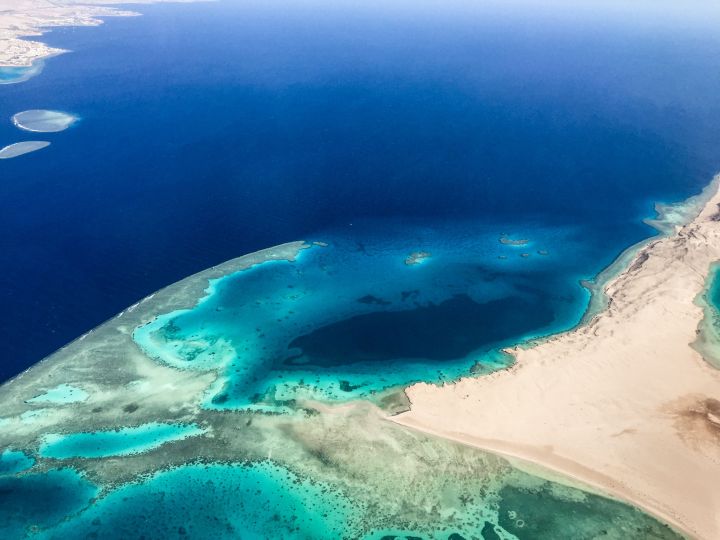

The coasts of the UAE and wider Arabian Gulf were once defined by a mosaic of productive marine ecosystems. Mangroves, mudflats, seagrass meadows, oyster beds, and coral reefs protected shorelines, supported fisheries, and underpinned coastal life in a region otherwise dominated by arid desert landscapes.[i] Over the past half century, however, these coastlines have been transformed at extraordinary speed to accommodate the rapidly growing economies and populations of Gulf nations.
Today, seawalls, breakwaters, jetties, dredged channels, ports, and reclaimed islands occupy large sections of the shore in many Gulf cities.[ii] Gulf-wide, more than 40% of the coastline is estimated to be artificial infrastructure, and in some cities man-made structures have more than doubled the length of natural shorelines.[iii]
That history is often framed as a story of ecological loss. Rapid coastal development has degraded or displaced habitats that sustained Gulf coastal societies for centuries and that still provide essential ecological services today. More than half of the Gulf’s sabkha habitats have been lost through infilling and dredging, while mangroves, seagrass beds, and coral reefs have all experienced localised damage from reclamation, channelisation, and coastal squeeze. But this history also raises a practical question.
We know that much of the Gulf’s coastline is engineered, and that infrastructure alters marine ecosystems. So, how should these engineered coastlines now be expected to perform ecologically?
That issue matters because the Gulf is not an empty basin into which infrastructure can be placed without consequence. It is a shallow, highly saline and environmentally marginal sea, exposed to severe summer heat, with marine communities living close to their physiological limits. In such a setting, the ecological performance of infrastructure is not a secondary consideration, but part of the broader question of how coastal development should be assessed.
The ecological response: not inconsequential, but not the same
That, in turn, requires a clearer understanding of the ecological role that coastal infrastructure already plays in the Gulf. Engineered shorelines do not simply replace marine habitat; once built, they also become habitat. Breakwaters, jetties, and similar structures are colonised by algae, sponges, corals, fishes, and a suite of other organisms, and over time they can support abundant and ecologically important communities.[iv] The issue, then, is not whether infrastructure affects nature - it clearly does. The more useful question is whether it can be designed, sited, and assessed in ways that allow it to support more life than it otherwise would.
Dubai provides one of the clearest examples of why this question matters. Research on its coastal developments has shown that over 200km of man-made shoreline has been added to about 50km of natural sandy coast, including more than 65km of rocky breakwaters. That represents a very large increase in hard-bottom marine habitat. The Palm Jumeirah breakwater alone is 16km long and provides roughly 140km² of submerged rocky reef habitat. Across Dubai’s major developments, the total area of submerged breakwater habitat exceeded 550km², in an area where there is less than 10km2 of natural hard-bottom reef. These structures are clearly no longer marginal features of the marine environment, but a substantial part of it.
The ecological response to these structures has also been substantial. Research on the Palm Jumeirah breakwater showed that the abundance and number of species of adult and juvenile fishes were generally comparable to those on the nearby natural reef, although the communities differed in composition. A total of 48 reef fish species were recorded on the Palm breakwater over two years, and exposed and sheltered breakwaters supported distinct fish assemblages, with the exposed structures closely resembling fish communities on natural reefs. These rocky breakwaters were therefore not biological voids, but important habitats for fish.
A similar pattern is evident in the communities growing on the structures themselves. Another study compared breakwaters ranging from one to 31 years old and found that these structures develop ecological communities over decades, not merely months.[v] Young breakwaters were dominated by algae, sponges, and oysters, while older structures became increasingly dominated by corals. Coral was virtually absent on the youngest breakwaters, but were colonised rapidly in the first few years following construction, with corals covering nearly half of the rocky bottom of 25 and 31-year-old breakwaters, compared with just a third of the seabed on nearby natural coral reefs. The trend showed no sign of levelling off after three decades. These were not transient communities, but long-developing marine ecosystems of clear ecological significance.
This is where an important distinction needs to be made: ecological value is not the same thing as ecological equivalence.
Location, materials, and hydrodynamics all play their part
In one of the clearest comparisons I have been involved in, we examined two large, mature breakwaters in Dubai, each more than 25 years old and larger than 400,000 m³, alongside six natural coral reefs. The breakwaters had more coral than the natural habitats, covering 50% compared with 31% of the bottom. But the coral reefs supported far more coral species – 29 species compared with 20 – and higher overall diversity.[vi] Fish communities on the breakwaters also differed in composition from those on coral reefs, and functioned differently. Our conclusion was that coastal infrastructure can indeed support abundant and diverse coral and fish communities, but they should not be seen as replacements for natural habitats.
That distinction is important. Engineered structures can provide real habitat value, sometimes substantial value, but they do not recreate nature and should not be used to justify impacts to natural habitats. Their ecological role is quite different. Where infrastructure is built, the relevant question is whether it can perform better for biodiversity than conventional design would, with some careful planning.
That is the relevance of ‘ecological engineering’ in this context. The point is not for concrete to replicate coral reefs or for piers to replace mangroves, but rather for coastal structures to be planned and constructed to do less harm and deliver greater ecological value.
The evidence strongly suggests that this is possible, but only if ecology is taken seriously at the design and engineering stage. For example, material can matter in some circumstances. In experiments conducted comparing common construction materials, colonisation by juvenile coral spat varied far more among locations than among materials, indicating that ecological setting was often the dominant control. Material was not irrelevant, however. At the site with the highest coral colonisation, at the Dubai Dry Docks, an incredible 490 juvenile corals settled per square metre, and the locally abundant rocks from the Hajar Mountains in Fujairah (gabbro) supported significantly more juveniles than the concrete or sandstone commonly used to construct breakwaters in the UAE.[vii] This suggests that material choice can influence ecological outcomes, but it does so most clearly where underlying environmental conditions are already favourable for colonisation.
Hydrodynamic setting matters as well. On the Palm Jumeirah breakwater, exposed windward sections had nearly five times more coral than sheltered leeward sections of the same age. Juvenile colonisation did not differ greatly between the two, but mortality was much higher on the sheltered sides because reduced water movement allowed fine sediments to accumulate. Fish communities also differed between exposed and sheltered breakwaters. These findings reinforce a broader point: ecological performance can be strongly shaped by choices about siting, exposure, material, and context, and should not be treated as an incidental by-product of the construction of coastal infrastructure.
Planning to do less harm and be more habitable
These results have direct implications for how Gulf coastal development is assessed. For decades, projects in the region were judged primarily in terms of land protection, commercial return, navigational access, or economic ambition. Those considerations remain important. But in a region where infrastructure already occupies such a large proportion of the shoreline, they are no longer sufficient on their own. It is also reasonable to ask what a structure does for marine ecology. Does it support diverse and persistent communities? Does it avoid creating sediment traps or a poor-quality habitat? Is it located where ecological gains are probable? Is its performance monitored over years and decades, rather than assumed at the point of construction?
Artificial reef projects illustrate both the opportunities and limitations of current practice. Their appeal is understandable as they are visible, attractive, and easy to present as environmental action. Yet in a recent analysis of Gulf artificial reef projects, we showed that most projects still lack clearly stated goals, quantifiable objectives, or adequate long-term monitoring.[viii] Some may be built to support biodiversity, fisheries, or tourism, but they may also inadvertently intensify fishing pressure, alter the surrounding seabed, facilitate invasive species, or create sink habitats for larval fish. The point is not that artificial reefs should be dismissed; it is that they should be treated as ecological interventions with measurable outcomes, rather than symbolic gestures. The same logic applies more broadly to Gulf coastal infrastructure.
The UAE is unusually well placed to lead in this area. It has already transformed large stretches of coastline. It has a growing scientific base, increasing institutional attention to sustainability, and the financial and technical capacity to improve how infrastructure is planned and assessed. A few years ago, I argued that incorporating ecological engineering into future Gulf development projects, and retrofitting existing infrastructure where feasible, could create habitats that are more valuable and deliver greater ecological goods and services with relatively limited added cost. That remains a sensible proposition. The aim should not be to suggest that infrastructure can replace the function of ecosystems. It should be to ensure that where such infrastructure is built, it is designed and managed in ways that support more marine life, impose less ecological cost, and are evaluated honestly over time.
The question facing Gulf nations is therefore no longer simply whether development should proceed along sensitive shorelines. In many places, that question has already been answered. The more important issue now is how coastal infrastructure should be designed, assessed, and managed in a region where engineered structures already occupy such a large share of the shoreline. If these structures are now a substantial part of coastal ecosystems in the Gulf, then their ecological performance should also form part of how development success is judged. This does not require imagining that infrastructure can replace nature. It requires a more practical expectation: that where infrastructure is built, it should be planned and managed in ways that do less harm and support more life than conventional approaches have typically allowed. And that is a standard the UAE is well placed to advance.
The opinions expressed in this article are solely those of the author and not Frontier25.
About the author: John Burt is a Professor of Biology at New York University Abu Dhabi where he is the Director of the Mubadala Arabian Center for Climate and Environmental Sciences. Burt has been studying the marine ecology of the UAE and Arabian Gulf for over 20 years, and has published over 170 scholarly articles. He edited A Natural History of the Emirates (Springer, 2024), and was awarded the Environment Changemaker medal by the Sheikh Hamdan bin Zayed Environmental Awards in 2026.